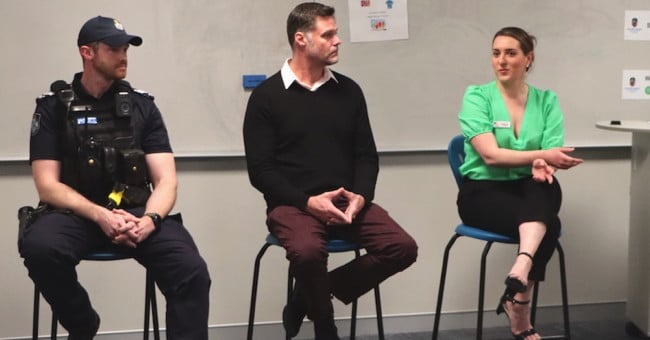
There's been a recent, significant shift away from traditional ways of helping students think about careers and their futures.
Rather than focusing young people on a single career decision at the end of schooling, contemporary career education programs are different: they are designed to help learners explore possibilities broadly, develop self-awareness, and build skills they're going to need throughout life.
With more students reporting uncertainty in the state of the world causing stress and worry about the future, the new career education approach has the huge advantage of making students the active designers of their own futures, rather than passive recipients of career advice. Evidence shows this shift is crucial in building confidence and optimism about the future.
But let's dial back to the beginning: how do you design for these outcomes?
For Australian school leaders and careers educators, understanding how to implement effective career education programs has become increasingly important as curriculum frameworks and wellbeing initiatives place greater emphasis on student futures. Global and Australian evidence agrees on several features that work -- and they may not be what you'd expect from 'careers' activity. Here are the features of effective career education in school:
Key elements of career education programs
- Career education helps students explore multiple future possibilities without pressure to decide.
- Student agency develops when young people are the active participant shaping their learning and future planning, rather than passive recipients of advice.
- Wide career exploration is especially valuable in earlier years of schooling such as years 5-8, when it is designed so that students investigate and try out or test career ideas actively, themselves, without preconceptions about what makes a good job or who can do what kinds of jobs.
- Early career exploration and repeated exposure to age-appropriate ways to explore career aspirations builds skills that improve senior secondary subject selection decisions and boost longer-term outcome
- Effective programs align with curriculum frameworks and integrate across multiple learning areas.
- Evidence-based career education learning for years 5–10 can significantly increase student engagement in school learning today. The BECOME program is proven to boost student engagement in learning (because it is relevant to a future they want for themselves), significantly lifting students' optimism and confidence about the future.
What is career education?
Contemporary career education applies principles similar to design thinking methodology to career exploration, aspiration ideas and life planning. This approach encourages students to prototype ideas, gather feedback, and iterate on their plans rather than committing to a single pathway too early.
The practical application emerged from academic research and theoretical development into how people make career decisions in complex, shifting circumstances (i.e. in an uncertain world), most notably in the Chaos Theory of Careers developed by Dr Jim Bright and Dr Richard Pryor and extensively published over 20 years (for just one recent article see Asia Pacific Career Development Journal Vol 6 no 1, March 2023).
The work of Bright and colleagues over decades clarifies and recognises the value of repeated, small experiments into career ideas, enabling individuals to test and refine their ideas and learn about their values and motivations through action rather than by abstract introspection.
As these chaos and complexity informed theories were taking shape and being validated in the world of career development, work at Stanford University's Life Design Lab was also applying design thinking to careers and emphasising how curiosity rather than anxiety can engage and motivate people to explore and iterate many possibilities for their future.
These principles have since been adapted for younger learners in school settings.
In a career education program, students learn to explore their interests, values, and strengths through structured activities led by their teachers. They develop a wide range of different career possibilities and challenge bias and assumptions. Then they actively test out aspects of their ideas through conversations, research, and projects that provide important practical experiences. This builds skill as well as self-knowledge.
Why start career education in year 5 or 6?
 Research consistently shows that career development benefits from early intervention. Waiting until the senior secondary years leaves students without adequate time to explore, reflect, and build the skills needed for informed decision-making, resulting in many choosing the 'easy' or obvious option without having explored first.
Years 5 and 6 represent a critical developmental period when young people's ideas about identity and their place in the world begin to solidify.
Engaging in lots of varied career exploration at this stage opens up possibilities before stereotypes and limiting beliefs take hold. They gain greater awareness and many, many more ideas to consider at the same time as they learn about their self, their potential and personal motivating values and interests.
By the time students reach Years 9 and 10, they face subject selection choices that shape their senior secondary pathways.
Students who have previously engaged in career exploration arrive at these decision points with greater clarity and confidence because they have explored and experienced multiple career ideas without pressure, and they are more likely to understand what might be a good career fit for themselves. They've tried on a few ideas for size before the decisions really matter.
What does the research say about early career education?
Data on the OECD Teenage Career Readiness dashboard indicates that more career education focus is needed. Evidence across the OECD's career readiness research demonstrates that students who engage with career-related activities during their secondary years achieve better employment and education outcomes.
One key recommendation is that low-pressure career education begin at an earlier age than has traditionally been the case. In the UK, the updated 2024 Gatsby Benchmarks indicate similar findings and recommend earlier intervention.
Students who explore careers broadly and repeatedly starting from the upper primary years show improved academic engagement. They can connect their learning to real-world applications and potential futures, which increases motivation and persistence to learn today, as well as for the future.
How is student agency connected to career education?
Student agency refers to students' capacity to set goals, make choices, and take action to influence their lives and learning.
The OECD Learning Compass 2030 framework identifies student agency as essential for young people preparing for an uncertain future.
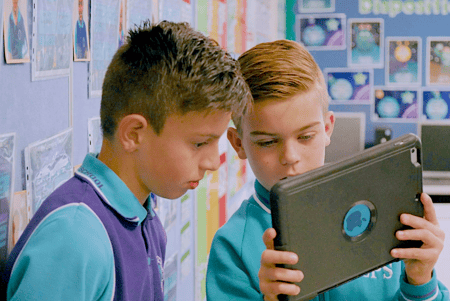 Career education builds student agency when it positions learners as active participants rather than passive recipients of information. Students don't simply receive career advice or take a test; they investigate, actively experiment, and draw their own conclusions, which then ideally feeds further exploration.
When students exercise agency over their career exploration, they develop transferable skills. They learn to gather information, evaluate options, assess their own capacity, make decisions regardless of uncertainty, and adjust course when circumstances change. These skills benefit from explicit teaching and early practise, and they apply to learning beyond career exploration. These skills are widely in demand in a shifting work force with changing dynamics, emerging industries and increasing automation in the workplace.
Having agency is linked to wellbeing
Research links student agency to improved wellbeing outcomes. Young people who believe they can influence their future, and know they have capacity to take action to make a desired future come true demonstrate greater optimism, resilience, and hopefulness about what lies ahead.
BECOME Education supports student wellbeing by fostering hope and student agency through its careers program. After completing the program, students consistently report feeling more optimistic about the future and more confident in taking action for themselves.
The future is not something abstract and scary that will happen to them, but a place and a life context they will design and navigate for themselves.
How do effective career education programs align with the Australian Curriculum?
Effective career education programs are designed to connect to existing curriculum frameworks rather than operating as standalone additions.
The Australian Blueprint for Career Development provides a structure for embedding career learning across year levels. The Blueprint identifies eleven career management competencies organised into three areas: personal management, learning and work exploration, and career building. Schools can map career explorations, projects and activities against these competencies to ensure coverage.
Career education also connects to General Capabilities including critical and creative thinking, personal and social capability, and ethical understanding. These connections allow career exploration to reinforce other curriculum priorities.
How can schools integrate career education across learning areas?
Career education works most effectively when teachers across multiple learning areas participate. Many subject teachers already seek to connect their content to career applications, helping students see relevance in their daily learning.
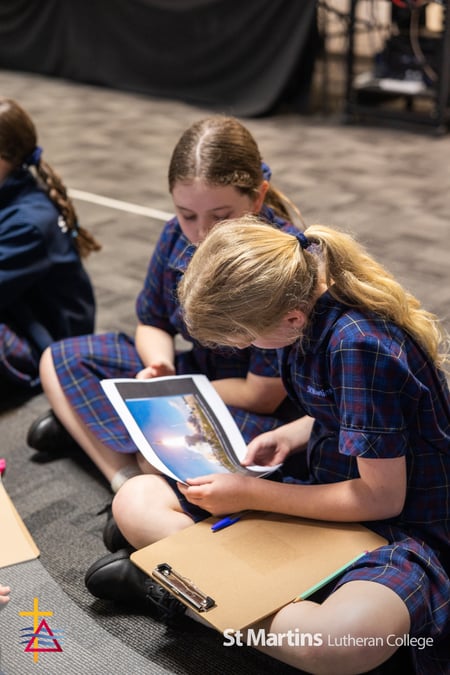 But there are additional creative ways to involve students in exploring career uses of classroom knowledge and understanding. For example, a Science class learning about the pH scale might require students to find one career that uses knowledge of acids and bases on a daily basis, and to explain this use to the class (see bakers, pharmacists, chemists, food product developers, chefs, winemakers, water quality testers and many more).
English teachers might explore how people shape narratives and use oral communication skills in business, education and public policy or politics. Students might find narrative skills in use in video game design, advertising, speech writing and corporate communications. They may find informative writing in use across fields such as finance, law, education and training, technical writing and sport - where English skills merge with statistics and mathematics to analyse player and team performance and engage viewers or readers in the drama of a sport series!
BECOME Education's training for educators helps all teachers understand their role in shaping student aspirations, regardless of their subject specialisation.
Wider, earlier exposure to many types of career ideas benefits students who, the OECD data shows, tend to have low exposure to careers and therefore very limited career ideas when they reach age 15.
What are the core components of effective career education programs?
Successful career education programs share several essential elements. Understanding these components helps schools evaluate existing offerings and identify areas for improvement.
1. Structured self-discovery activities
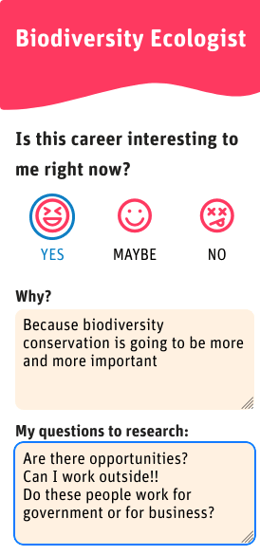 Students need opportunities to explore their own interests, values, strengths, and motivations, delivered in ways that structure the engagement, outcome and reflection. The resulting self-awareness forms the foundation for meaningful career exploration.
Effective self-discovery goes beyond simple interest inventories. Students examine their past experiences, reflect on what energises them, and consider what kind of life they want to live. This is much wider than careers.
The BECOME program's teacher-led lesson plans and exploration activities prompt students to consider what makes a full life and what success means to them, at the same time as exploring authoritative, extensive career areas and industries.
2. Broad career exploration
Career education programs expose students to a wide range of career possibilities. This breadth helps counter stereotypes and limited awareness. Seeing a wide range of workplaces, types of work, different valued skills and approaches reassures some students that there is opportunity for a valuable place for their unique self in the world. This can be powerful to those with strengths other than academic performance.
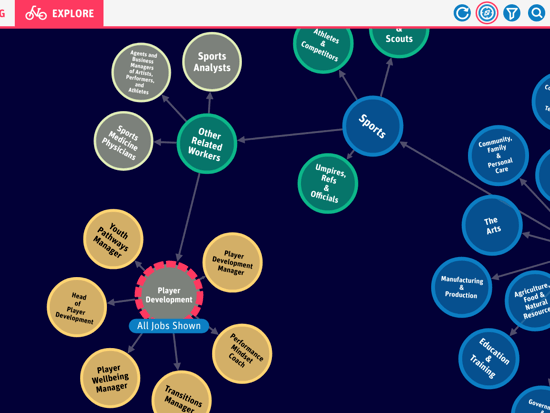
By broad exploration activities we include career research, conversations with working professionals, workplace visits and virtual visits, information hunts and multimedia career search challenges. The aim is to expand thinking rather than narrow it. The teacher-led challenges in the BECOME student app are fun but have the designed purpose of engaging student curiosity about careers.
3. Prototyping and testing
Drawing from design thinking methodology, career education programs encourage students to test their ideas through low-risk experiments. They might interview someone working in a field of interest or try specific activities they identify as related to potential careers, such as collecting scientific data for a week to see if they can be consistent.
These prototyping experiences help students gather real information rather than relying on assumptions. They learn that career planning is iterative rather than a one-time decision. Real experiences contribute to their self awareness and ideas shaping aspirations.
4. Reflection and Iteration
Regular guided reflection helps students make sense of their exploration and experiences. They consider what they have learned, how their thinking has changed, and what they want to investigate next. They are supported to change their ideas and try new experiments - because this is earlier than traditional careers, there is no pressure restricting curiosity led exploration. That benefits students hugely.
Career education and life design treats planning as an ongoing process. Students understand that their ideas will evolve as they learn more about themselves and the world of work. They learn the skills to do this for themselves throughout life.
How does earlier career education support senior subject selection?
Subject selection choices in secondary school carry significant weight for students' senior pathways. This is when it does begin to count. Career education helps students approach these decisions with greater preparation.
Students who have explored career possibilities understand how different subjects connect to potential pathways. This extends across years 5-8, and it pays off with senior subject selections.
By year 9, they are better able to make informed choices based on their interests and aspirations rather than default options or peer influence. The BECOME secondary program includes specific support for subject selection, helping students look broadly, think deeply, and challenge assumptions about careers within the context of their senior learning plan.
Why is subject selection challenging for students?
Many students arrive at subject selection without adequate preparation. They might lack awareness of how subjects connect to careers, or hold misconceptions about requirements for careers. Many feel pressure to choose pathways prematurely or, as recent Monash University research by Gleeson et al shows, feel under pressure to choose careers to please someone else, rather than as a good fit chosen by and for their self. Some simply avoid the question altogether.
Traditional approaches often emphasise matching students to careers based on aptitude - narrowing them down to career options - rather than supporting them to explore possibilities widely and learn how to assess opportunities. A narrow approach to career education can reinforce limiting beliefs and narrow options.
Career education addresses these challenges by building exploration skills earlier, so students approach subject selection as one step in an ongoing process rather than a defining moment.
What does implementation look like for schools?
Schools need to consider scope and sequence, teacher preparation, and integration with existing programs. To change traditional approaches to career education requires forethought and planning.
1. Develop a Scope and Sequence
An effective scope and sequence maps career learning across year levels. Activities build progressively, with each year introducing new concepts and revisiting earlier learning at greater depth.
Primary years focus on opening possibilities and introducing career concepts. Middle years deepen self-awareness and broaden exploration. Senior years connect exploration to decision-making and transition planning.
BECOME Education provides Scope and Sequence documents for year levels 5-10 (year 11 in New Zealand), and can advise on integration to existing career development activities.

2. Build teacher capacity
Teachers need support to deliver career education effectively. Professional learning helps educators adopt and integrate the new approach, build confidence with resources, and connect career learning to their subject areas. Career education represents a shift in focus and may not match what educators expect to see from career activities.
BECOME Education offers professional development options ranging from short courses for all teachers to in-depth training for careers leaders seeking to enhance their practice, or to work towards certification.
3. Use data to inform practice
Effective career education programs include mechanisms for gathering and using student data. Schools can track student aspirations, engagement, and readiness over time.
Data insights help careers leaders target initiatives, identify students who need additional support, and demonstrate program impact to stakeholders. BECOME Education captures student aspirations pre- and post-program to support data-driven transition planning, and provides an Insights Dashboard that enables school systems or school leaders, as well as curriculum and careers leaders, to see aspirations developing over a class, cohort, year level or whole school.
How does career education differ when compared to traditional career counselling?
Career education represents a philosophical shift from traditional approaches to career counselling or career guidance and testing. Understanding these differences helps schools evaluate which approach best serves their students.
A shift from matching to designing
Traditional career counselling puts the emphasis on matching students to careers, based on assessments (tests) of interests and aptitudes. Students receive advice and results to guide them at the moment of subject or pathway selection.
In contrast, career education positions students as active designers who generate and test possibilities for themselves, ideally long before. This shift reflects changes in the world of work. Careers are increasingly non-linear, and the ability to adapt and redesign becomes more valuable than finding a single match.
 A shift from decisions to skills
Traditional approaches often focus on making career decisions at key transition points. Instead, career education emphasises building lifelong career management skills.
Students learn how to explore, evaluate, decide, and adapt. These skills serve them throughout life as circumstances change and new opportunities emerge, especially as they navigate their careers in a shifting world and changing workplace.
A shift from the individual to a whole-school systemic approach
Traditional career counselling typically involves one-on-one interactions between students and specialist counsellors. Career education takes a whole-school approach.
All teachers contribute to shaping student aspirations. Career learning integrates with curriculum and wellbeing initiatives rather than operating separately.
What role do all teachers play in career education?
Teachers across all learning areas influence student career thinking, whether intentionally or not. Career education helps teachers recognise and harness this influence effectively.
Every teacher shapes how students see themselves as learners. They influence which careers students connect to different subjects and help define what success means in their learning community.
The Heart of the Future course from BECOME Education helps all teachers understand their impact on student aspirations and learn practical strategies for embedding career conversations into their practice.
Teachers don't need to become career experts. They need frameworks and resources that make career connections practical, feasible within their existing practice and engaging to students.
How can schools evaluate the quality of a career education program?
Schools investing in careers programs need ways to evaluate program quality and impact. Several frameworks and indicators can guide this assessment.
Use benchmarking resources
The Career Industry Council of Australia (CICA) School Career Development Service Benchmarking Resource provides a framework for assessing career service quality. Schools can use it repeatedly as a quality improvement tool.
The resource describes features of contemporary school-based career development and sets progressive performance benchmarks. It helps schools identify strengths and areas for improvement.
Measure student outcomes
Effective evaluation includes measuring student outcomes. Schools might track changes in student aspirations, career awareness, decision-making confidence, and engagement with career-related activities.
Longitudinal tracking helps demonstrate program impact over time. OECD Career Readiness data shows that students who participate in career education show improved outcomes in senior subject selection, post-school transitions, and employment. BECOME longitudinal data shows a significant uplift in student engagement with learning at school today, as well as improved confidence and optimism about the future. BECOME was invited to present this data in a paper at the OECD's Disrupted Futures conference 2023 and 2021.
What are some of the challenges schools face when designing career education for years 5-10?
Schools overcome several hurdles, not least the traditional expectations that limit what career education is and what years it has value in schools.
Some of the challenges schools overcome include:
 Time & curriculum pressures
Finding time for career learning within crowded schedules presents ongoing challenges. Schools must consider competing demands on student time.
Integration strategies help address this challenge. When career education connects to existing curriculum and wellbeing programs, it adds value without requiring significant additional time allocation. The link between career exploration and wellbeing, as well as its boost to student engagement, helps schools justify short, repeated exposure to career education programs such as BECOME. Early, often and integrated career education provides the best value for time spent.
Consistent practice
Ensuring consistent career education experiences for students across teachers and year levels requires ongoing attention. Structures can help coordination, monitoring, and continuous improvement. Having one person as dedicated careers lead can help maintain consistency, conducting regular reviews of practice and outcomes, working with school leaders to identify areas needing attention. Professional learning, and data capture as programs are running, ensures career education supports the school's strategic aims, such as wellbeing, student agency, and transition to high school.
Engaging all students
Some students arrive at career exploration with limited aspirations or previous negative experiences with career-related activities. Engaging these students requires thoughtful approaches and practical expertise.
Career education can reach disengaged students by connecting to their interests and positioning them as active participants. Open exploration of careers without judgement or traditional success metrics provides more potential for a young person to see a place for themself in the diversity of the working world. When students see evidence of relevance to their lives, engagement usually improves.
What does the future hold for career education?
Contemporary career education continues to evolve. It is a focus in policy and leadership, and builds momentum as educators learn more about effective practices and the link to engagement, wellbeing, confidence and optimism for the world beyond school.
Several trends shape the future direction of the contemporary career education and development field.
Technology-enhanced learning
Digital tools increasingly support career education. Interactive platforms help students explore possibilities, document their thinking, and track their development over time. The best platforms ensure the student is the active agent rather than passively 'shopping' career information.
BECOME Education's student web app draws students in and opens their minds to possibilities for a future that inspires them to action. Technology enables personalised exploration at scale, as each student has a personal career ideas log that they can build, change, add notes to, access in future years and export.
A growing research base
Research continues to strengthen the evidence base for the contemporary approach to career education. Studies examine which approaches work best for different student populations and in various school contexts.
This growing evidence helps schools make informed decisions about program design and implementation.
It also supports advocacy for career education resources and priority.
Evidenced connection with wellbeing
The connections between career exploration and student wellbeing are becoming better understood. Schools increasingly integrate career education with broader wellbeing and mental health initiatives.
Young people who cannot picture their future are less likely to invest in the present. Career education helps students develop hopeful visions for their futures, supporting both engagement and wellbeing.
Summary: Building effective school career education programs for years 5 to 10
Career education offers a powerful approach to preparing students for their future.
By starting early, building student agency, and integrating career exposure with curriculum, schools can help young people develop their awareness and skills for an uncertain world of work.
Effective career education program implementation requires a carefully designed scope and sequence that builds student agency, teacher currency and capacity, and ongoing career education program quality review. Schools that invest in these areas see improved student engagement, raised optimism and confidence, better-informed senior subject selection decisions, and stronger post-school outcomes.
For schools seeking evidence-based career education programs, BECOME Education offers a comprehensive program including teacher-led curriculum-aligned resources for Years 5–10, professional learning for educators, dynamic and engaging technology with careers data on over 50,000 career ideas, personal student careers ideas log, and school or system-level data insights to inform school and system strategy. The BECOME program builds student agency and career confidence while supporting the practical work of teachers and careers leaders across Australian schools.
FAQs about career education programs for Years 5 to 10
What age should students start career education and exploration?
Evidence supports starting career exploration in upper primary years. Years 5 and 6 represent a critical period when students' ideas about identity and their place in the world begin to form. BECOME Education delivers programs from Year 5 onward, opening possibilities before limiting beliefs and stereotypes take hold.
How does career education differ from career counselling?
Career education focuses on career exploration and skills, and it deliberately positions students as active designers of their futures. Traditional counselling often focuses on matching students to careers at transition points or choosing pathways. BECOME Education's approach develops lifelong career management capabilities and a capacity to handle uncertainty rather than single decisions and pathways.
Do teachers need special qualifications to deliver career education?
Teachers across all learning areas can contribute to career education without specialist qualifications. Professional learning helps educators understand their influence on student aspirations and integrate career connections into their practice. BECOME Education offers training for all teachers, as well as special training for careers practitioners.
How does career education support subject selection?
Students who engage in earlier career exploration approach subject selection with greater awareness and confidence. They understand how different subjects connect to potential pathways and wider career areas, which helps them make informed choices. BECOME Education offers schools a tailored program of support for students approaching the senior subject selection process.

What outcomes can schools expect from career education programs?
Research shows improved student engagement, greater optimism about the future, and more confident decision-making. After the BECOME program, 60% of students report feeling more optimistic about the future. Schools also gain data insights to inform careers strategy and target where support is needed.
How do career programs align with the Australian Curriculum?
Effective career education programs connect to frameworks including the Australian Blueprint for Career Development, state curricula and General Capabilities in the Australian Curriculum. Career learning can integrate with and support student engagement in existing curriculum rather than competing for separate time. BECOME Education offers curriculum-aligned lessons designed for Years 5–10 (6-11 in New Zealand).
The value of teachers
All teachers have enormous positive influence over student career aspirations.
They influence and guide students in how to develop aspirations, create optimism and willingness to take action towards the future (which often means action right now).
This fun, short course from BECOME covers how, and when, to guide students' emerging career aspirations (and when to step back). It's for all teachers, and we invite you to join us or book in your team.
>> Find out more or register to start now
 Bev Laing

 Liv Pennie : Aug 4, 2026, 1:06:39 PM