What's it like to have one career idea? Well, if you're good at Maths, your one idea might be to become a mathematician. If you enjoy History, why not become a historian?
Suggesting a 1:1 relation between one subject and one career undersells what we teach as well as what's possible.
There's a whole world of potential for the student who loves any subject. Maths could lead to weather modeling, economics, architecture, or data analytics. Maths can be applied in IT, space exploration, environmental modelling, industrial design, hydro engineering, retail forecasting ... and hundreds more careers.
When we assume there is only one career 'match' (Maths = mathematician, History = Historian, English = Writer), we're missing so many options and rich possibilities.
Le's get be transparent with students and challenge some assumptions:
-
🏥 Is English only for writers? How often do medical professionals, project managers, aircraft accident investigators need to communicate clearly? (All the time, with important consequences if they don't.) Can we find three unexpected careers that need an identifiable skill we learn in English?
-
🏀 Is maths (or science) involved in sport? (Yes! Maths and Science are everywhere, like in game statistics, player nutrition and performance optimisation, just as a start.)
-
✍️ Without the arts, where does the content everyone watches, reads or listens to come from? (And no, AI was not used to write this blog post.)
The art of surprise
As the OECD's global indicators of teenage career readiness remind us, having a conversation with an adult at school about your ideas for the future is a vital step towards career readiness.
So, one powerful but simple thing all teachers can do is to talk about careers that use their subject, every day.
If the connections between subject and careers surprise students, even better! Surprise is a useful jolt that can help us all step beyond old patterns of thinking.
Limited thinking, like Maths = Mathematician (and nothing else), History = Historian. Get wide and as wide as you can in careers linking.
Challenge narrow career thinking with a surprising question:
-
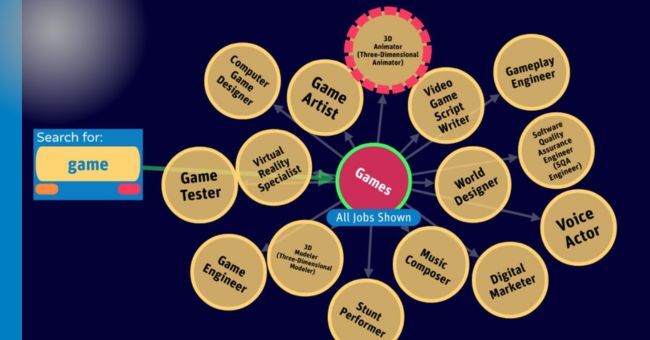
'Who composes the music in video games?' (And are any of these pros so famous their name on the game sells it? - Hint: Zelda.)
-
'How much maths do you think air traffic controllers use?' (Hint: Look for example entry exams for training; what do you see there and which subjects does it relate to?)
-
'How much do journalists need to know about history?' (And does this depend on what kind of journalist you are?)
-
'Where would we find earth sciences in archaeology?' (Does anyone have any ideas that we could check with a real archaeologist?)
-
'How much do psychologists use statistics?' (How could you find out?)
-
'What kinds of communication skills does a flight attendant need?' (Who could we ask?)
Surprise opens up the route for new and wider ideas about careers
The short examples in this video are contributions from teachers in The Heart of the Future course.
They show how everyone - educators AND students - gets inspired when we start showcasing the relevance of our learning area.
What do you teach that's used in unexpected places?
Boosting engagement
When we compare student responses before they've done the BECOME program and afterwards, we see a big jump up in how relevant students think school is. This is because they can see school learning relates to a future they want to make happen.
It's usually about a 20% lift in relevance of school learning. This translates to engagement -- a decision to invest in learning today because they can see that it links directly to a tomorrow they really want to make happen.
Learning now is a route to the future, but they decided that for themselves. Learning becomes the first step on a journey they want to take.
Our short course is about how to expand students' awareness of career opportunities, specifically how talking about the future can inspire learners today.
All teachers can have a big impact on students' optimism, and their willingness to put effort in their learning right now. Knowing what to do and when makes a big difference to engagement to learn today.
Heart of the Future unpacks how, when and what to do to boost career exploration. It's packed practical tips and activities for teachers of all subject areas in years 5-11.
Unlock the heart of student engagement today.
 Bev Laing


 Bev Laing : Mar 12, 2026, 4:51:01 PM